606 lines
22 KiB
Plaintext
606 lines
22 KiB
Plaintext

|
---
|
|||
|
|
title: "bun install"
|
|||
|
|
description: "Install packages with Bun's fast package manager"
|
|||
|
|
---
|
|||
|
|
|
|||
|
|
import Install from "/snippets/cli/install.mdx";
|
|||
|
|
|
|||
|
|
## Basic Usage
|
|||
|
|
|
|||
|
|
```bash terminal icon="terminal"
|
|||
|
|
bun install react
|
|||
|
|
bun install [email protected] # specific version
|
|||
|
|
bun install react@latest # specific tag
|
|||
|
|
```
|
|||
|
|
|
|||
|
|
The `bun` CLI contains a Node.js-compatible package manager designed to be a dramatically faster replacement for `npm`, `yarn`, and `pnpm`. It's a standalone tool that works in existing Node.js projects; if your project has a `package.json`, you can use `bun install`.
|
|||
|
|
|
|||
|
|
<Note>
|
|||
|
|
|
|||
|
|
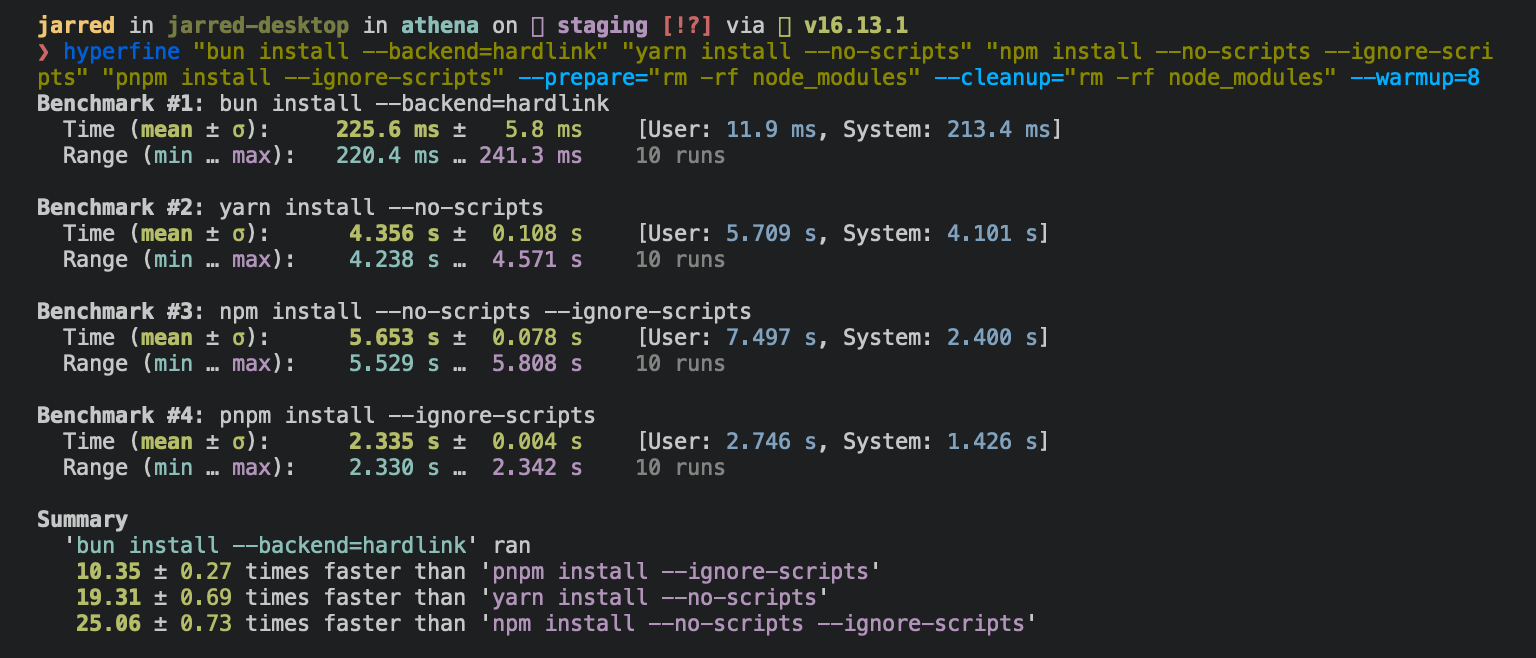
**⚡️ 25x faster** — Switch from `npm install` to `bun install` in any Node.js project to make your installations up to 25x faster.
|
|||
|
|
|
|||
|
|
<Frame>
|
|||
|
|
|
|||
|
|
</Frame>
|
|||
|
|
|
|||
|
|
</Note>
|
|||
|
|
|
|||
|
|
To install all dependencies of a project:
|
|||
|
|
|
|||
|
|
```bash terminal icon="terminal"
|
|||
|
|
bun install
|
|||
|
|
```
|
|||
|
|
|
|||
|
|
`bun install`:
|
|||
|
|
|
|||
|
|
- **Installs** all `dependencies`, `devDependencies`, and `optionalDependencies`. Bun installs `peerDependencies` by default.
|
|||
|
|
- **Runs** your project's `{pre|post}install` and `{pre|post}prepare` scripts at the appropriate time. For security reasons Bun _does not execute_ lifecycle scripts of installed dependencies unless they are [trusted](/pm/lifecycle).
|
|||
|
|
- **Writes** a `bun.lock` lockfile to the project root.
|
|||
|
|
|
|||
|
|
---
|
|||
|
|
|
|||
|
|
## Logging
|
|||
|
|
|
|||
|
|
To modify logging verbosity:
|
|||
|
|
|
|||
|
|
```bash terminal icon="terminal"
|
|||
|
|
bun install --verbose # debug logging
|
|||
|
|
bun install --silent # no logging
|
|||
|
|
```
|
|||
|
|
|
|||
|
|
---
|
|||
|
|
|
|||
|
|
## Lifecycle scripts
|
|||
|
|
|
|||
|
|
Unlike other npm clients, Bun does not execute arbitrary lifecycle scripts like `postinstall` for installed dependencies. Executing arbitrary scripts represents a potential security risk.
|
|||
|
|
|
|||
|
|
To tell Bun to allow lifecycle scripts for a particular package, add the package to `trustedDependencies` in your package.json.
|
|||
|
|
|
|||
|
|
```json package.json icon="file-json"
|
|||
|
|
{
|
|||
|
|
"name": "my-app",
|
|||
|
|
"version": "1.0.0",
|
|||
|
|
"trustedDependencies": ["my-trusted-package"] // [!code ++]
|
|||
|
|
}
|
|||
|
|
```
|
|||
|
|
|
|||
|
|
Then re-install the package. Bun reads this field and runs lifecycle scripts for `my-trusted-package`.
|
|||
|
|
|
|||
|
|
Lifecycle scripts run in parallel during installation. To adjust the maximum number of concurrent scripts, use the `--concurrent-scripts` flag. The default is two times the reported cpu count or GOMAXPROCS.
|
|||
|
|
|
|||
|
|
```bash terminal icon="terminal"
|
|||
|
|
bun install --concurrent-scripts 5
|
|||
|
|
```
|
|||
|
|
|
|||
|
|
Bun automatically optimizes postinstall scripts for popular packages (like `esbuild` and `sharp`) by determining which scripts need to run. To disable these optimizations:
|
|||
|
|
|
|||
|
|
```bash terminal icon="terminal"
|
|||
|
|
BUN_FEATURE_FLAG_DISABLE_NATIVE_DEPENDENCY_LINKER=1 bun install
|
|||
|
|
BUN_FEATURE_FLAG_DISABLE_IGNORE_SCRIPTS=1 bun install
|
|||
|
|
```
|
|||
|
|
|
|||
|
|
---
|
|||
|
|
|
|||
|
|
## Workspaces
|
|||
|
|
|
|||
|
|
Bun supports `"workspaces"` in package.json. See [workspaces](/pm/workspaces).
|
|||
|
|
|
|||
|
|
```json package.json icon="file-json"
|
|||
|
|
{
|
|||
|
|
"name": "my-app",
|
|||
|
|
"version": "1.0.0",
|
|||
|
|
"workspaces": ["packages/*"], // [!code ++]
|
|||
|
|
"dependencies": {
|
|||
|
|
"preact": "^10.5.13"
|
|||
|
|
}
|
|||
|
|
}
|
|||
|
|
```
|
|||
|
|
|
|||
|
|
---
|
|||
|
|
|
|||
|
|
## Installing dependencies for specific packages
|
|||
|
|
|
|||
|
|
In a monorepo, you can install the dependencies for a subset of packages using the `--filter` flag.
|
|||
|
|
|
|||
|
|
```bash terminal icon="terminal"
|
|||
|
|
# Install dependencies for all workspaces except `pkg-c`
|
|||
|
|
bun install --filter '!pkg-c'
|
|||
|
|
|
|||
|
|
# Install dependencies for only `pkg-a` in `./packages/pkg-a`
|
|||
|
|
bun install --filter './packages/pkg-a'
|
|||
|
|
```
|
|||
|
|
|
|||
|
|
See [filtering](/pm/filter#bun-install-and-bun-outdated).
|
|||
|
|
|
|||
|
|
---
|
|||
|
|
|
|||
|
|
## Overrides and resolutions
|
|||
|
|
|
|||
|
|
Bun supports npm's `"overrides"` and Yarn's `"resolutions"` in `package.json`. Both specify a version range for _metadependencies_, the dependencies of your dependencies. See [overrides and resolutions](/pm/overrides).
|
|||
|
|
|
|||
|
|
{/* prettier-ignore */}
|
|||
|
|
```json package.json icon="file-json"
|
|||
|
|
{
|
|||
|
|
"name": "my-app",
|
|||
|
|
"dependencies": {
|
|||
|
|
"foo": "^2.0.0"
|
|||
|
|
},
|
|||
|
|
"overrides": { // [!code ++]
|
|||
|
|
"bar": "~4.4.0" // [!code ++]
|
|||
|
|
} // [!code ++]
|
|||
|
|
}
|
|||
|
|
```
|
|||
|
|
|
|||
|
|
---
|
|||
|
|
|
|||
|
|
## Global packages
|
|||
|
|
|
|||
|
|
To install a package globally, use the `-g`/`--global` flag. Use it to install command-line tools.
|
|||
|
|
|
|||
|
|
```bash terminal icon="terminal"
|
|||
|
|
bun install --global cowsay # or `bun install -g cowsay`
|
|||
|
|
cowsay "Bun!"
|
|||
|
|
```
|
|||
|
|
|
|||
|
|
```txt
|
|||
|
|
______
|
|||
|
|
< Bun! >
|
|||
|
|
------
|
|||
|
|
\ ^__^
|
|||
|
|
\ (oo)\_______
|
|||
|
|
(__)\ )\/\
|
|||
|
|
||----w |
|
|||
|
|
|| ||
|
|||
|
|
```
|
|||
|
|
|
|||
|
|
---
|
|||
|
|
|
|||
|
|
## Production mode
|
|||
|
|
|
|||
|
|
To install in production mode (without `devDependencies`):
|
|||
|
|
|
|||
|
|
```bash terminal icon="terminal"
|
|||
|
|
bun install --production
|
|||
|
|
```
|
|||
|
|
|
|||
|
|
`--production` implies `--frozen-lockfile`. It only controls what gets installed. `devDependencies` already in `node_modules` from an earlier install stay there. Use [`bun prune --production`](/pm/cli/prune) to remove them.
|
|||
|
|
|
|||
|
|
For reproducible installs, use `--frozen-lockfile`. Bun installs the exact versions specified in the lockfile and does not update it. If your `package.json` disagrees with `bun.lock`, Bun exits with an error.
|
|||
|
|
|
|||
|
|
```bash terminal icon="terminal"
|
|||
|
|
bun install --frozen-lockfile
|
|||
|
|
```
|
|||
|
|
|
|||
|
|
Bun does not enable `--frozen-lockfile` automatically in CI; pass the flag or use `bun ci`. If there is no lockfile at all, `--frozen-lockfile` installs from `package.json` without writing one.
|
|||
|
|
|
|||
|
|
`--frozen-lockfile` works on a pruned monorepo checkout (e.g. `turbo prune` output, or a Docker context with only some workspace folders copied in). If a workspace listed in `bun.lock` is missing its `package.json` on disk, Bun skips it with a `note:` and does not install its exclusive dependencies. If a remaining workspace depends on a skipped one, the install fails.
|
|||
|
|
|
|||
|
|
To validate the lockfile without installing, use `bun install --frozen-lockfile --dry-run`.
|
|||
|
|
|
|||
|
|
See [lockfile](/pm/lockfile) for more on `bun.lock`.
|
|||
|
|
|
|||
|
|
---
|
|||
|
|
|
|||
|
|
## Omitting dependencies
|
|||
|
|
|
|||
|
|
To omit dev, peer, or optional dependencies, use the `--omit` flag.
|
|||
|
|
|
|||
|
|
```bash terminal icon="terminal"
|
|||
|
|
# Exclude "devDependencies" from the installation. This will apply to the
|
|||
|
|
# root package and workspaces if they exist. Transitive dependencies will
|
|||
|
|
# not have "devDependencies".
|
|||
|
|
bun install --omit dev
|
|||
|
|
|
|||
|
|
# Install only dependencies from "dependencies"
|
|||
|
|
bun install --omit=dev --omit=peer --omit=optional
|
|||
|
|
```
|
|||
|
|
|
|||
|
|
---
|
|||
|
|
|
|||
|
|
## Dry run
|
|||
|
|
|
|||
|
|
To perform a dry run, without installing anything:
|
|||
|
|
|
|||
|
|
```bash terminal icon="terminal"
|
|||
|
|
bun install --dry-run
|
|||
|
|
```
|
|||
|
|
|
|||
|
|
---
|
|||
|
|
|
|||
|
|
## Non-npm dependencies
|
|||
|
|
|
|||
|
|
Bun supports installing dependencies from Git, GitHub, and local or remotely-hosted tarballs. See [`bun add`](/pm/cli/add).
|
|||
|
|
|
|||
|
|
```json package.json icon="file-json"
|
|||
|
|
{
|
|||
|
|
"dependencies": {
|
|||
|
|
"dayjs": "git+https://github.com/iamkun/dayjs.git",
|
|||
|
|
"lodash": "git+ssh://github.com/lodash/lodash.git#4.17.21",
|
|||
|
|
"moment": "[email protected]:moment/moment.git",
|
|||
|
|
"zod": "github:colinhacks/zod",
|
|||
|
|
"react": "https://registry.npmjs.org/react/-/react-18.2.0.tgz",
|
|||
|
|
"bun-types": "npm:@types/bun"
|
|||
|
|
}
|
|||
|
|
}
|
|||
|
|
```
|
|||
|
|
|
|||
|
|
---
|
|||
|
|
|
|||
|
|
## Installation strategies
|
|||
|
|
|
|||
|
|
Bun supports two package installation strategies that determine how dependencies are organized in `node_modules`:
|
|||
|
|
|
|||
|
|
### Hoisted installs
|
|||
|
|
|
|||
|
|
The traditional npm/Yarn approach that flattens dependencies into a shared `node_modules` directory:
|
|||
|
|
|
|||
|
|
```bash terminal icon="terminal"
|
|||
|
|
bun install --linker hoisted
|
|||
|
|
```
|
|||
|
|
|
|||
|
|
### Isolated installs
|
|||
|
|
|
|||
|
|
A pnpm-like approach that creates strict dependency isolation to prevent [phantom dependencies](/pm/isolated-installs), packages you can import without declaring them in `package.json`:
|
|||
|
|
|
|||
|
|
```bash terminal icon="terminal"
|
|||
|
|
bun install --linker isolated
|
|||
|
|
```
|
|||
|
|
|
|||
|
|
Isolated installs create a central package store in `node_modules/.bun/` with symlinks in the top-level `node_modules`. This ensures packages can only access their declared dependencies.
|
|||
|
|
|
|||
|
|
### Default strategy
|
|||
|
|
|
|||
|
|
The default linker strategy depends on whether you're starting fresh or have an existing project:
|
|||
|
|
|
|||
|
|
- **New workspaces/monorepos**: `isolated` (prevents phantom dependencies)
|
|||
|
|
- **New single-package projects**: `hoisted` (traditional npm behavior)
|
|||
|
|
- **Existing projects (made pre-v1.3.2)**: `hoisted` (preserves backward compatibility)
|
|||
|
|
|
|||
|
|
A `configVersion` field in your lockfile controls the default. For a detailed explanation, see [isolated installs](/pm/isolated-installs).
|
|||
|
|
|
|||
|
|
---
|
|||
|
|
|
|||
|
|
## Minimum release age
|
|||
|
|
|
|||
|
|
To protect against supply chain attacks where malicious packages are quickly published, you can configure a minimum age requirement for npm packages. Bun filters out package versions published more recently than the specified threshold (in seconds) during installation.
|
|||
|
|
|
|||
|
|
```bash terminal icon="terminal"
|
|||
|
|
# Only install package versions published at least 3 days ago
|
|||
|
|
bun add @types/bun --minimum-release-age 259200 # seconds
|
|||
|
|
```
|
|||
|
|
|
|||
|
|
You can also configure this in `bunfig.toml`:
|
|||
|
|
|
|||
|
|
```toml bunfig.toml icon="settings"
|
|||
|
|
[install]
|
|||
|
|
# Only install package versions published at least 3 days ago
|
|||
|
|
minimumReleaseAge = 259200 # seconds
|
|||
|
|
|
|||
|
|
# Exclude trusted packages from the age gate
|
|||
|
|
minimumReleaseAgeExcludes = ["@types/node", "typescript"]
|
|||
|
|
```
|
|||
|
|
|
|||
|
|
When the minimum age filter is active:
|
|||
|
|
|
|||
|
|
- It only affects new package resolution; existing packages in `bun.lock` remain unchanged
|
|||
|
|
- Bun filters all dependencies (direct and transitive) to meet the age requirement when resolving them
|
|||
|
|
- When the age gate blocks versions, a stability check detects rapid bugfix patterns
|
|||
|
|
- If multiple versions were published close together just outside your age gate, Bun extends the filter to skip those potentially unstable versions and selects an older, more mature version
|
|||
|
|
- The check searches up to 7 days past the age gate; if releases are still rapid beyond that, Bun ignores the stability check
|
|||
|
|
- Exact version requests (like `[email protected]`) still respect the age gate but bypass the stability check
|
|||
|
|
- Bun treats versions without a `time` field as passing the age check (the npm registry should always provide timestamps)
|
|||
|
|
|
|||
|
|
For more advanced security scanning, including integration with services and custom filtering, see the [Security Scanner API](/pm/security-scanner-api).
|
|||
|
|
|
|||
|
|
---
|
|||
|
|
|
|||
|
|
## Configuration
|
|||
|
|
|
|||
|
|
### Configuring `bun install` with `bunfig.toml`
|
|||
|
|
|
|||
|
|
On `bun install`, `bun remove`, and `bun add`, Bun looks for `bunfig.toml` in:
|
|||
|
|
|
|||
|
|
1. `$XDG_CONFIG_HOME/.bunfig.toml` or `$HOME/.bunfig.toml`
|
|||
|
|
2. `./bunfig.toml`
|
|||
|
|
|
|||
|
|
If Bun finds both, it loads both. Keys set in the project's `bunfig.toml` override the same keys in the global file.
|
|||
|
|
|
|||
|
|
Configuring with `bunfig.toml` is optional. These are the default values:
|
|||
|
|
|
|||
|
|
```toml bunfig.toml icon="settings"
|
|||
|
|
[install]
|
|||
|
|
|
|||
|
|
# whether to install optionalDependencies
|
|||
|
|
optional = true
|
|||
|
|
|
|||
|
|
# whether to install devDependencies
|
|||
|
|
dev = true
|
|||
|
|
|
|||
|
|
# whether to install peerDependencies
|
|||
|
|
peer = true
|
|||
|
|
|
|||
|
|
# equivalent to `--production` flag
|
|||
|
|
production = false
|
|||
|
|
|
|||
|
|
# equivalent to `--save-text-lockfile` flag
|
|||
|
|
saveTextLockfile = true
|
|||
|
|
|
|||
|
|
# equivalent to `--frozen-lockfile` flag
|
|||
|
|
frozenLockfile = false
|
|||
|
|
|
|||
|
|
# equivalent to `--dry-run` flag
|
|||
|
|
dryRun = false
|
|||
|
|
|
|||
|
|
# equivalent to `--concurrent-scripts` flag
|
|||
|
|
concurrentScripts = 16 # (cpu count or GOMAXPROCS) x2
|
|||
|
|
|
|||
|
|
# installation strategy: "hoisted" or "isolated"
|
|||
|
|
# default depends on lockfile configVersion and workspaces:
|
|||
|
|
# - configVersion = 1: "isolated" if using workspaces, otherwise "hoisted"
|
|||
|
|
# - configVersion = 0: "hoisted"
|
|||
|
|
linker = "hoisted"
|
|||
|
|
|
|||
|
|
|
|||
|
|
# minimum age config
|
|||
|
|
minimumReleaseAge = 259200 # seconds
|
|||
|
|
minimumReleaseAgeExcludes = ["@types/node", "typescript"]
|
|||
|
|
```
|
|||
|
|
|
|||
|
|
### Configuring with environment variables
|
|||
|
|
|
|||
|
|
Environment variables take priority over `bunfig.toml`.
|
|||
|
|
|
|||
|
|
| Name | Description |
|
|||
|
|
| ---------------------------------- | --------------------------------------------------------- |
|
|||
|
|
| `BUN_CONFIG_REGISTRY` | Set an npm registry (default: https://registry.npmjs.org) |
|
|||
|
|
| `BUN_CONFIG_TOKEN` | Set an auth token for the default registry |
|
|||
|
|
| `BUN_CONFIG_YARN_LOCKFILE` | Save a Yarn v1-style yarn.lock |
|
|||
|
|
| `BUN_CONFIG_SKIP_SAVE_LOCKFILE` | Don’t save a lockfile |
|
|||
|
|
| `BUN_CONFIG_SKIP_LOAD_LOCKFILE` | Don’t load a lockfile |
|
|||
|
|
| `BUN_CONFIG_SKIP_INSTALL_PACKAGES` | Don’t install any packages |
|
|||
|
|
|
|||
|
|
Bun uses the fastest installation method available on the target platform: `clonefile` on macOS and `hardlink` on Linux and Windows. You can change the installation method with the `--backend` flag. When unavailable or on error, `clonefile` and `hardlink` fall back to a platform-specific implementation of copying files.
|
|||
|
|
|
|||
|
|
Bun stores installed packages from npm in `~/.bun/install/cache/${name}@${version}`. If the semver version has a `build` or a `pre` tag, Bun replaces it with a hash of that value. This reduces the chances of errors from long file paths, but complicates figuring out where a package was installed on disk.
|
|||
|
|
|
|||
|
|
When the `node_modules` folder exists, Bun decides whether to install a package by checking that the `"name"` and `"version"` in its `package.json` at the expected `node_modules` location match the expected name and version. It uses a custom JSON parser which stops parsing as soon as it finds `"name"` and `"version"`.
|
|||
|
|
|
|||
|
|
When a `bun.lock` doesn’t exist or `package.json` has changed dependencies, Bun downloads and extracts tarballs eagerly while resolving.
|
|||
|
|
|
|||
|
|
When a `bun.lock` exists and `package.json` hasn’t changed, Bun downloads missing dependencies lazily. If the package with a matching `name` and `version` already exists in the expected location within `node_modules`, Bun doesn’t attempt to download the tarball.
|
|||
|
|
|
|||
|
|
## CI/CD
|
|||
|
|
|
|||
|
|
Use the official [`oven-sh/setup-bun`](https://github.com/oven-sh/setup-bun) action to install `bun` in a GitHub Actions pipeline:
|
|||
|
|
|
|||
|
|
```yaml .github/workflows/release.yml icon="file-code"
|
|||
|
|
name: bun-types
|
|||
|
|
jobs:
|
|||
|
|
build:
|
|||
|
|
name: build-app
|
|||
|
|
runs-on: ubuntu-latest
|
|||
|
|
steps:
|
|||
|
|
- name: Checkout repo
|
|||
|
|
uses: actions/checkout@v4
|
|||
|
|
- name: Install bun
|
|||
|
|
uses: oven-sh/setup-bun@v2
|
|||
|
|
- name: Install dependencies
|
|||
|
|
run: bun install
|
|||
|
|
- name: Build app
|
|||
|
|
run: bun run build
|
|||
|
|
```
|
|||
|
|
|
|||
|
|
For CI/CD environments that want to enforce reproducible builds, use `bun ci` to fail the build if the package.json is out of sync with the lockfile:
|
|||
|
|
|
|||
|
|
```bash terminal icon="terminal"
|
|||
|
|
bun ci
|
|||
|
|
```
|
|||
|
|
|
|||
|
|
`bun ci` is equivalent to `bun install --frozen-lockfile`. It installs exact versions from `bun.lock` and fails if `package.json` doesn't match the lockfile. To use `bun ci` or `bun install --frozen-lockfile`, you must commit `bun.lock` to version control.
|
|||
|
|
|
|||
|
|
In your workflow, run `bun ci` instead of `bun install`:
|
|||
|
|
|
|||
|
|
```yaml .github/workflows/release.yml icon="file-code"
|
|||
|
|
name: bun-types
|
|||
|
|
jobs:
|
|||
|
|
build:
|
|||
|
|
name: build-app
|
|||
|
|
runs-on: ubuntu-latest
|
|||
|
|
steps:
|
|||
|
|
- name: Checkout repo
|
|||
|
|
uses: actions/checkout@v4
|
|||
|
|
- name: Install bun
|
|||
|
|
uses: oven-sh/setup-bun@v2
|
|||
|
|
- name: Install dependencies
|
|||
|
|
run: bun ci
|
|||
|
|
- name: Build app
|
|||
|
|
run: bun run build
|
|||
|
|
```
|
|||
|
|
|
|||
|
|
## Platform-specific dependencies?
|
|||
|
|
|
|||
|
|
Bun stores normalized `cpu` and `os` values from npm in the lockfile, along with the resolved packages. It skips downloading, extracting, and installing packages disabled for the current target at runtime. This means the lockfile doesn't change between platforms/architectures even if the packages ultimately installed do change.
|
|||
|
|
|
|||
|
|
### `--cpu` and `--os` flags
|
|||
|
|
|
|||
|
|
You can override the target platform for package selection:
|
|||
|
|
|
|||
|
|
```bash
|
|||
|
|
bun install --cpu=x64 --os=linux
|
|||
|
|
```
|
|||
|
|
|
|||
|
|
These flags install packages for the specified platform instead of the current system. Use them for cross-platform builds or when preparing deployments for different environments.
|
|||
|
|
|
|||
|
|
**Accepted values for `--cpu`**: `arm`, `arm64`, `ia32`, `mips`, `mipsel`, `ppc`, `ppc64`, `s390`, `s390x`, `x32`, `x64`
|
|||
|
|
|
|||
|
|
**Accepted values for `--os`**: `aix`, `darwin`, `freebsd`, `linux`, `openbsd`, `sunos`, `win32`, `android`
|
|||
|
|
|
|||
|
|
## Peer dependencies?
|
|||
|
|
|
|||
|
|
Bun handles peer dependencies like Yarn: `bun install` installs them automatically. If the dependency is marked optional in `peerDependenciesMeta`, Bun uses an existing dependency if possible.
|
|||
|
|
|
|||
|
|
## Lockfile
|
|||
|
|
|
|||
|
|
`bun.lock` is Bun’s lockfile format. See [our blog post about the text lockfile](https://bun.com/blog/bun-lock-text-lockfile).
|
|||
|
|
|
|||
|
|
Before Bun 1.2, the lockfile was binary and called `bun.lockb`. To upgrade an old lockfile to the new format, run `bun install --save-text-lockfile --frozen-lockfile --lockfile-only`, then delete `bun.lockb`.
|
|||
|
|
|
|||
|
|
## Cache
|
|||
|
|
|
|||
|
|
To delete the cache:
|
|||
|
|
|
|||
|
|
```bash
|
|||
|
|
bun pm cache rm
|
|||
|
|
# or
|
|||
|
|
rm -rf ~/.bun/install/cache
|
|||
|
|
```
|
|||
|
|
|
|||
|
|
## Platform-specific backends
|
|||
|
|
|
|||
|
|
For performance, `bun install` uses different system calls to install dependencies depending on the platform. You can force a specific backend with the `--backend` flag.
|
|||
|
|
|
|||
|
|
**`hardlink`** is the default backend on Linux and Windows. Benchmarking showed it to be the fastest on Linux.
|
|||
|
|
|
|||
|
|
```bash
|
|||
|
|
rm -rf node_modules
|
|||
|
|
bun install --backend hardlink
|
|||
|
|
```
|
|||
|
|
|
|||
|
|
**`clonefile`** is the default backend on macOS. Benchmarking showed it to be the fastest on macOS. It is only available on macOS.
|
|||
|
|
|
|||
|
|
```bash
|
|||
|
|
rm -rf node_modules
|
|||
|
|
bun install --backend clonefile
|
|||
|
|
```
|
|||
|
|
|
|||
|
|
**`clonefile_each_dir`** is similar to `clonefile`, except it clones each file individually per directory. It is only available on macOS and tends to perform slower than `clonefile`. Unlike `clonefile`, `clonefile_each_dir` does not recursively clone subdirectories in one system call.
|
|||
|
|
|
|||
|
|
```bash
|
|||
|
|
rm -rf node_modules
|
|||
|
|
bun install --backend clonefile_each_dir
|
|||
|
|
```
|
|||
|
|
|
|||
|
|
**`copyfile`** is the fallback used when any of the above fail, and is the slowest. On macOS, it uses `fcopyfile()`; on Linux, it uses `copy_file_range()`.
|
|||
|
|
|
|||
|
|
```bash
|
|||
|
|
rm -rf node_modules
|
|||
|
|
bun install --backend copyfile
|
|||
|
|
```
|
|||
|
|
|
|||
|
|
**`symlink`** is typically only used for `file:` dependencies internally (for example `file:../foo` and transitive `file:` dependencies). `link:` dependencies do not use this backend; Bun installs them as a single symlink to the linked directory.
|
|||
|
|
|
|||
|
|
If you install with `--backend=symlink`, Node.js won't resolve node_modules of dependencies unless each dependency has its own node_modules folder or you pass `--preserve-symlinks` to `node` or `bun`. See [Node.js documentation on `--preserve-symlinks`](https://nodejs.org/api/cli.html#--preserve-symlinks).
|
|||
|
|
|
|||
|
|
```bash
|
|||
|
|
rm -rf node_modules
|
|||
|
|
bun install --backend symlink
|
|||
|
|
bun --preserve-symlinks ./my-file.js
|
|||
|
|
node --preserve-symlinks ./my-file.js # https://nodejs.org/api/cli.html#--preserve-symlinks
|
|||
|
|
```
|
|||
|
|
|
|||
|
|
## npm registry metadata
|
|||
|
|
|
|||
|
|
Bun uses a binary format for caching npm registry responses. This loads much faster than JSON and tends to be smaller on disk.
|
|||
|
|
These files live in `~/.bun/install/cache/*.npm`. The filename pattern is `${hash(packageName)}.npm`. It’s a hash so that Bun doesn’t need to create extra directories for scoped packages.
|
|||
|
|
|
|||
|
|
Bun's usage of `Cache-Control` ignores `Age`. This improves performance, but means Bun may be about 5 minutes behind the latest package version metadata from npm.
|
|||
|
|
|
|||
|
|
## pnpm migration
|
|||
|
|
|
|||
|
|
Bun migrates projects from pnpm automatically. When Bun detects a `pnpm-lock.yaml` file and no `bun.lock` file exists, it converts the lockfile to `bun.lock` during installation. The original `pnpm-lock.yaml` file remains unmodified.
|
|||
|
|
|
|||
|
|
```bash terminal icon="terminal"
|
|||
|
|
bun install
|
|||
|
|
```
|
|||
|
|
|
|||
|
|
Migration only runs when `bun.lock` is absent. There is currently no opt-out flag for pnpm migration.
|
|||
|
|
|
|||
|
|
The migration process handles:
|
|||
|
|
|
|||
|
|
### Lockfile Migration
|
|||
|
|
|
|||
|
|
- Converts `pnpm-lock.yaml` (lockfile versions 7–9, including pnpm 11's multi-document files) to `bun.lock`
|
|||
|
|
- Preserves resolved versions and integrity hashes
|
|||
|
|
- Preserves peer dependency ranges and `peerDependenciesMeta`, so the next `bun install` leaves the migrated lockfile unchanged
|
|||
|
|
- Migrates git, GitHub, tarball URL, `file:`, and `npm:` alias dependencies, including transitive ones
|
|||
|
|
- Resolves pnpm named registries (`name@registry:version`) via `namedRegistries` in `pnpm-workspace.yaml`
|
|||
|
|
- Converts injected workspace packages (`dependenciesMeta.*.injected`) to ordinary workspace dependencies
|
|||
|
|
- Handles patched dependencies, matching pnpm's hash-only `patchedDependencies` entries to the patch files
|
|||
|
|
- Skips `runtime:` entries (pnpm-managed Node.js versions) with a warning
|
|||
|
|
|
|||
|
|
### Workspace Configuration
|
|||
|
|
|
|||
|
|
When a `pnpm-workspace.yaml` file exists, Bun migrates workspace settings to your root `package.json`:
|
|||
|
|
|
|||
|
|
```yaml pnpm-workspace.yaml icon="file-code"
|
|||
|
|
packages:
|
|||
|
|
- "apps/*"
|
|||
|
|
- "packages/*"
|
|||
|
|
|
|||
|
|
catalog:
|
|||
|
|
react: ^18.0.0
|
|||
|
|
typescript: ^5.0.0
|
|||
|
|
|
|||
|
|
catalogs:
|
|||
|
|
build:
|
|||
|
|
webpack: ^5.0.0
|
|||
|
|
babel: ^7.0.0
|
|||
|
|
```
|
|||
|
|
|
|||
|
|
Bun moves the workspace packages list and catalogs to the `workspaces` field in `package.json`:
|
|||
|
|
|
|||
|
|
```json package.json icon="file-json"
|
|||
|
|
{
|
|||
|
|
"workspaces": {
|
|||
|
|
"packages": ["apps/*", "packages/*"],
|
|||
|
|
"catalog": {
|
|||
|
|
"react": "^18.0.0",
|
|||
|
|
"typescript": "^5.0.0"
|
|||
|
|
},
|
|||
|
|
"catalogs": {
|
|||
|
|
"build": {
|
|||
|
|
"webpack": "^5.0.0",
|
|||
|
|
"babel": "^7.0.0"
|
|||
|
|
}
|
|||
|
|
}
|
|||
|
|
}
|
|||
|
|
}
|
|||
|
|
```
|
|||
|
|
|
|||
|
|
### Catalog Dependencies
|
|||
|
|
|
|||
|
|
Bun preserves dependencies that use pnpm's `catalog:` protocol:
|
|||
|
|
|
|||
|
|
```json package.json icon="file-json"
|
|||
|
|
{
|
|||
|
|
"dependencies": {
|
|||
|
|
"react": "catalog:",
|
|||
|
|
"webpack": "catalog:build"
|
|||
|
|
}
|
|||
|
|
}
|
|||
|
|
```
|
|||
|
|
|
|||
|
|
### Configuration Migration
|
|||
|
|
|
|||
|
|
Bun migrates the following pnpm configuration from both `pnpm-lock.yaml` and `pnpm-workspace.yaml`:
|
|||
|
|
|
|||
|
|
- **Overrides**: Moved from `pnpm.overrides` to root-level `overrides` in `package.json`
|
|||
|
|
- **Patched Dependencies**: Moved from `pnpm.patchedDependencies` to root-level `patchedDependencies` in `package.json`
|
|||
|
|
- **Workspace Overrides**: Applied from `pnpm-workspace.yaml` to root `package.json`
|
|||
|
|
|
|||
|
|
### Requirements and limitations
|
|||
|
|
|
|||
|
|
- Requires pnpm lockfile version 7 or higher
|
|||
|
|
- Workspace packages must have a `name` field in their `package.json`
|
|||
|
|
- All catalog entries referenced by dependencies must exist in the catalogs definition
|
|||
|
|
- Every workspace in `pnpm-lock.yaml` must have its `package.json` on disk (in Docker, copy them in before `bun install`)
|
|||
|
|
- Relative `link:` dependencies and git dependencies with a sub-directory (`resolution.path`) are not supported
|
|||
|
|
- If migration fails for any of these reasons, Bun prints why and resolves from scratch instead
|
|||
|
|
|
|||
|
|
After migration, you can safely remove `pnpm-lock.yaml` and `pnpm-workspace.yaml` files.
|
|||
|
|
|
|||
|
|
---
|
|||
|
|
|
|||
|
|
<Install />
|